
Hospitals in India evoke mixed feelings. Nobody wants to need one. But if they do, they want the best clinical care without financial ruin. But do hospital stocks make good investment choices for retail investors?
A list of publicly listed hospitals sorted by revenue, features all the familiar names.
The top seven are multi-speciality hospitals. The rest — HCG, Dr. Agarwal’s, and Rainbow Children’s Medicare — are single-speciality players. Single-speciality hospitals have different economics (lower cost per bed, different operational benchmarks) and different dynamics (seasonality, case mix). This report therefore, focuses on the top multi-speciality players. One more name worth watching that’s not on the above list: Manipal Hospitals, which has filed its DRHP and is on its way to listing.
The one thing that stands out is that in the last 5 years, owning the majority of hospital stocks has clearly worked for investors going by stock returns.
Sector tailwinds have been favourable. Rising life expectancy, urbanisation, higher incomes, and growing health awareness have all helped. So has the rising burden of non-communicable diseases. India’s elderly population is growing fast — the CRISIL report, ‘Assessment of Healthcare Delivery Sector in India – March 2026’, commissioned for the DRHP of Manipal Health Enterprises Limited (Manipal) projects that those aged 60 and above will rise from 10% of the population in 2023 to 12.6% by 2030. Health insurance penetration has also improved, climbing from 35% in FY19 to 41% in FY24, driven by a growing middle class and employer-provided coverage.
Medical tourism adds another layer of demand — patients travel within India to established healthcare hubs, and international visitors come for quality care at competitive prices, though visa constraints / geopolitics have moderated this in recent years. Other structural supports include favourable government policy (PMJAY, CGHS), a persistent demand-supply gap, and a fragmented and patchy market with facilities skewed toward metros and certain geographies more than others.
These tailwinds are generic. But what has actually driven growth for the individual listed players beyond these common factors — and can those drivers continue? That is what this report looks at.
Apollo – The Original Corporate Hospital
Apollo Hospitals Enterprises Limited (Apollo) leads the listed pack by revenue, market cap, and operational beds. Founded in 1983 and credited as India’s first corporate hospital, Apollo has grown into a large, complex organisation with over a dozen subsidiaries and step-down entities, plus several JVs and associates. Its business spans three verticals: Hospitals; Apollo Health and Lifestyle (AHLL — outpatient clinics, diagnostics, day-surgery centres, and single-speciality facilities); and Apollo HealthCo (AHL — pharmacy and digital health).
The Hospitals segment contributes about half the revenue but over 80% of EBITDA. Apollo is, in its current form, an integrated healthcare business — not a pure-play hospital company. Despite its scale, it has maintained mid-teen revenue growth annually (barring the pandemic year of FY21 and the sharp recovery in FY22).
Hospital revenue growth, while not spectacular, has stayed in double digits — ahead of AHLL but behind the faster-growing AHL segment. Between FY22 and FY25, its hospital count rose only modestly — from 71 to 76 — and operational beds grew from 7,875 to 9,561 (indicating more brownfield expansion). Its AHL outlet count expanded from 4,529 to 7,113. Importantly, operating metrics moved in the right direction: ARPOB rose from Rs. 45,327 to Rs. 73,593; occupancy improved from 63% to 67%; and ALOS fell from 3.96 days to 3.16 days.
ARPOB (Average Revenue per Operating Bed): This measures the revenue that an occupied bed generates per day. Hospital management wants this to be higher rather than lower.
Occupancy: This measures the percentage of beds occupied by inpatients against all available beds. Hospital management wants this to be higher in order to better cover all the fixed costs that a hospital typically incurs. A too high occupancy rate could also give signals on when expansions could be needed to avoid capacity constraints.
ALOS (Average Length of Stay): This measures how efficiently a hospital is using its bed capacity. Hospital management wants this to be lower so patients can be turned around faster to accommodate more volumes.
This indicates that Apollo’s approach to growth has been calibrated rather than aggressive bed capacity addition — focused on improving bed utilisation, case mix, and payer mix. Management commentary increasingly highlights CONGO-T specialties (cardiac, oncology, neurosciences, gastroenterology, orthopedics, and transplant) as key growth drivers. These cases commanded 64% of the case mix in 9M FY26, with Q3 FY26 clocking 16% year-on-year growth in these areas.
Operationally, Tamil Nadu accounts for nearly a quarter of Apollo’s beds and appears to have stronger metrics in terms of occupancy and average revenue per inpatient — a reflection of facility maturity and brand strength in that market. Insurance now accounts for 45% of cases, with self-pay at 40%, indicating a resilient payer mix.
Blended margins were hit during the pandemic but have recovered firmly, hovering near 15% consolidated, with the hospital business itself running closer to 25%.
Going Forward
Two milestones define Apollo’s near to medium term outlook.
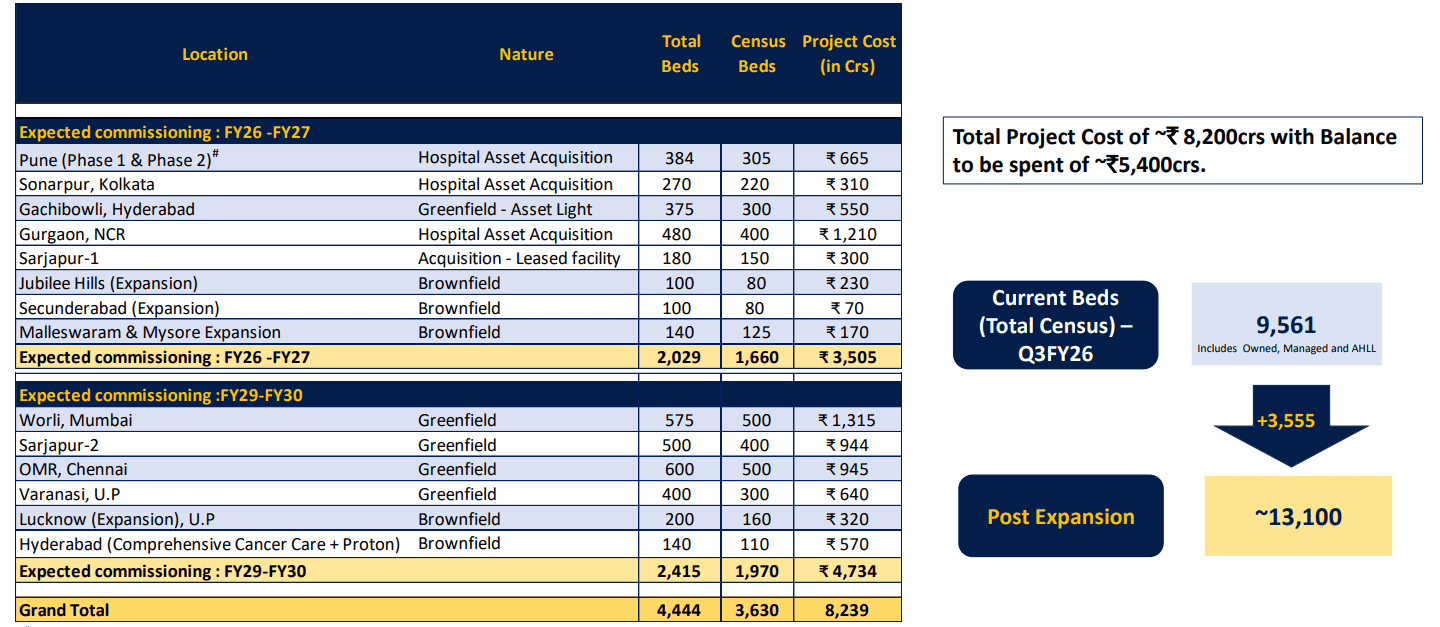
First, a major expansion plan targeting over 4,000 new beds by FY30, with the first 2,000 going live in FY26–27. These will be added via a mix of greenfield (just over half), brownfield, lease, and asset-light models, at a total capex of Rs. 8,200 crore (Rs. 5,400 crore still to be spent). Management expects to fund this through cash and internal accruals, with no immediate need to raise debt and this is good from a balance sheet perspective. New hospitals need time to ramp up on occupancy and break even and this could take from 12-18 months upwards depending on the type of facility, location, type of expansion etc. So while revenue may see a bump as new facilities go live, margins could dip as these capacities ramp up operationally.
Second, is the planned demerger and independent listing of Apollo HealthCo — which houses the pharmacy business and Apollo 24/7 digital platform. Apollo 24/7, which received Advent funding to finance the acquisition and merger of Keimed (India’s largest wholesale pharmaceutical distributor, founded by the Kamineni group – connected to the promoter family), is targeting cash breakeven in Q3–Q4 FY26. Cash losses in the Digital segment narrowed to Rs. 29 crore in Q3, the lowest in any quarter so far.
The demerger will moderate consolidated revenue growth, since AHL currently accounts for over 40% of the top line and grows at a faster clip. But it will sharpen Apollo’s margin profile to more closely reflect a pure-play hospital business. AHLL, the weakest margin segment, is also expected to improve — management has indicated margins in that vertical could trend toward 15%.
Fortis Healthcare – Recovered from its villain era
Fortis Healthcare’s 300%-plus stock return over five years reflects its recovery from near-collapse. Founded in 1996, Fortis became synonymous with its erstwhile promoters Shivinder Singh and Malvinder Singh (of Ranbaxy infamy), who were embroiled in debt default and litigation. By 2018, the company faced an existential crisis.
IHH Healthcare — Malaysia’s listed private hospital operator and Asia’s largest — stepped in with a Rs. 4,000 crore infusion in 2018–19, stabilising the balance sheet. New management was installed by 2021. Non-performing assets were divested. IHH now holds 31.1% of Fortis and recently received approval for a mandatory open offer for an additional 26%.
The recovery since then has been steady. Occupancy rates, which were previously languishing below 60%, are now comfortably above that threshold. Expansions have been executed via the capital-efficient brownfield route. IHH’s global network has also helped Fortis negotiate better pricing on supplies and medical equipment. Naturally, stock returns followed too.
Fortis also includes a diagnostics business — Agilus — in which it holds an 89.2% stake. Hospitals remain the dominant revenue driver at over 80% of the total, albeit at a slightly lower margin than diagnostics.
As of December 2025, Fortis operates 36 healthcare facilities with 6,000 operational beds. Revenue has grown at a 3-year CAGR of over 10% through FY25, and EBITDA margins have held above 20% in FY25 and through 9M FY26.
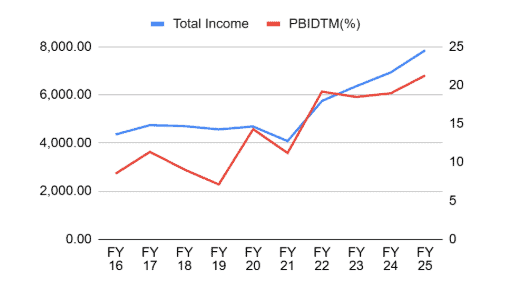
Source: Data from ACE Equity Database
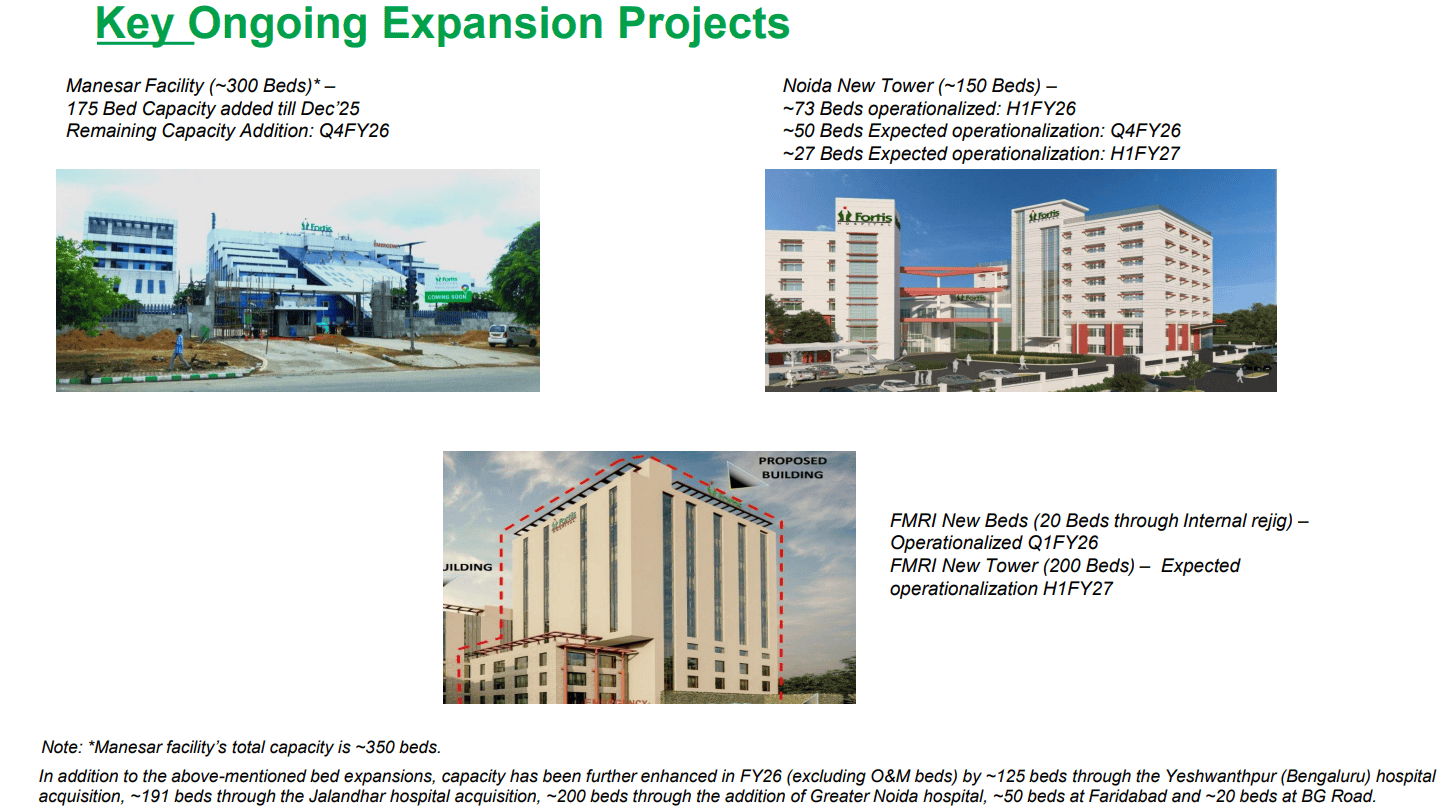
Bed count has grown over 50% between FY22 and December 2025, with occupancy and ARPOB both tracking upward. The turnaround has been the result of several parallel efforts.
- Loss-making facilities were rationalised and exited. Fortis Vadapalani in Chennai was sold to Sri Kauvery Medical Care; Fortis Malar Hospital — the second major loss-making Chennai facility — was sold to MGM Healthcare.
- International business was prioritised and grew from Rs. 215 crore in FY22 to Rs. 539 crore in FY25, now contributing nearly 10% of revenue.
- The company sharpened its focus on key specialties — oncology, gastroenterology, neurosciences, renal sciences, orthopaedics, and cardiac sciences — a conscious pivot that had been missing earlier. Revenue from these areas rose from 55% of total in FY22 to 62.1% in FY25.
- Clinical infrastructure was strengthened, supported in part by IHH’s procurement network. The company also invested meaningfully in adding clinical talent across its focus specialties.
- Digital channels were leveraged and now account for nearly 30% of hospital revenue, up from around 25% in FY23.
- Acquisitions have been used strategically to strengthen key clusters — most notably a tertiary-care hospital in Gurugram in FY23–24 to bolster the NCR footprint, and more recently, People Tree Hospital in Bengaluru (an acquisition that includes the underlying land, with plans to expand from 125 beds to over 300).
Going Forward
IHH has signalled that India — via Fortis — is its top-priority growth market. The target is to grow Indian beds from roughly 6,000 today to up to 10,000 by 2030.
The hospital business is targeting mid-to-high teens revenue growth, with consolidated EBITDA margins of 24–25% by FY27–28, up from the current 22%. The levers are elective surgery volumes, oncology, organ transplants, and robotic surgery — all of which drive higher ARPOB and occupancy.
The diagnostics vertical (Agilus) is earmarked for scale, targeting 400-plus labs and 4,000-plus touchpoints, with management positioning it as a key growth engine anchored to the shift toward preventive care and direct-to-consumer testing. Digital, telemedicine, and outpatient/ambulatory care (asset-light) and medical tourism are also cited as growth drivers.
Debt ticked up last year, primarily to fund the acquisition of the PE stake in Agilus and the purchase of Shrimann Hospital in Jalandhar. The company’s debt-to-equity ratio is lower than most peers.
A potential future development is the separate listing of Agilus: the filing of a DRHP in 2024 highlights this possibility at some point. IHH has also indicated that it sees itself as a long-term strategic holder rather than a typical financial investor.
One item that’s worth flagging: Fortis carries goodwill in excess of Rs. 4,000 crore on its books, related to acquisitions and IHH’s original stake purchase. Any future impairment could hit equity and reported earnings.
Max Healthcare – The Poster Boy
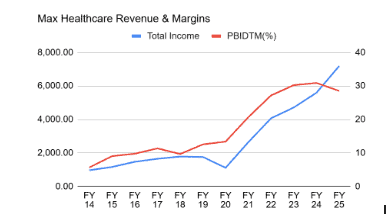
Max Healthcare (Max) has been the market favourite having returned 750% since its IPO in August 2020 and in excess of 300% in the last five years. But it wasn’t always smooth sailing (though it isn’t as dramatic a turnaround story as Fortis).
Before 2018, the company was weighed down by operational inefficiencies, thin margins, and execution challenges — particularly at its flagship hospitals in Delhi NCR. This was despite a strong brand and well-located facilities in the North. The business was part of the broader Max Group (which also included insurance and senior living). Life Healthcare of South Africa held a 49.7% stake; Max India’s promoter, Analjit Singh, controlled the rest. When Life Healthcare decided to exit India, the stage was set for a transformation. EBITDA margins were in single digits; PAT was negative in both FY18 and FY19.
Enter Radiant, Abhay Soi, and KKR. Radiant Life Care — promoted by Soi and backed by KKR’s Asian Fund III — acquired Life Healthcare’s 49.7% stake in Max Healthcare Institute (MHIL) for approximately Rs. 2,136 crore (~$303 million). Simultaneously, Max India demerged its non-healthcare businesses (Max Bupa and Antara Senior Living) into a separate listed entity. Its promoters received a Rs. 361 crore advance from KKR for a 4.99% stake in the future merged entity, which was used to reduce Max’s debt.
Radiant’s own hospitals — BLK Hospital in Delhi and Nanavati Hospital in Mumbai — were then merged into Max. KKR and Soi received Max shares in return. Post-merger, KKR held approximately 52% and Soi approximately 23% of the enlarged entity. The original Max India promoters were diluted to around 7% and reclassified as public shareholders.
From there on, the restructured entity’s revenue and EBITDA improved sharply, driven by structural cost savings and a stronger clinical programme as is typical post private equity entry.
Source: Data from ACE Equity Database
KKR made a full exit in August 2022 — one of its largest India returns at the time — leaving Soi as the core promoter-operator with a meaningful personal stake.
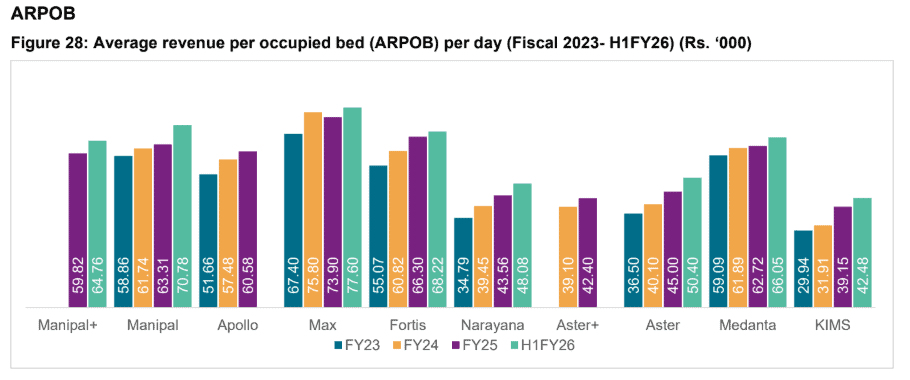
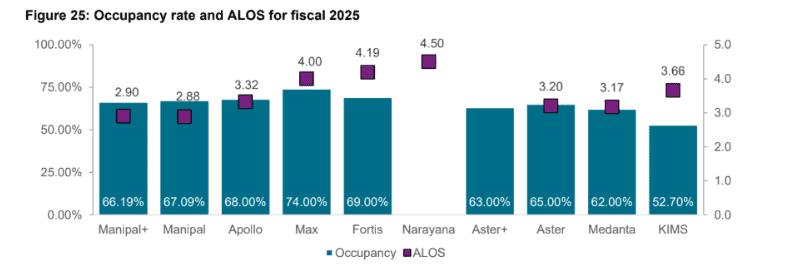
Max today operates 5,200 beds across 20 facilities, with 73% of beds in metros (per the CRISIL report commissioned by Manipal Hospitals for the DRHP). Its footprint is concentrated in the North (Delhi NCR, Haryana, Punjab, Uttarakhand) and parts of Maharashtra (Mumbai–Pune). This metro concentration, combined with a sharp focus on oncology, cardiology, neurology, transplants, and orthopaedics, has translated into industry-leading ARPOB and occupancy levels.
Source: CRISIL report commissioned by Manipal Hospitals for the DRHP
Source: CRISIL report commissioned by Manipal Hospitals for the DRHP
These strengths have also produced the highest EBITDA margins in the multi-speciality hospital space.
Going forward
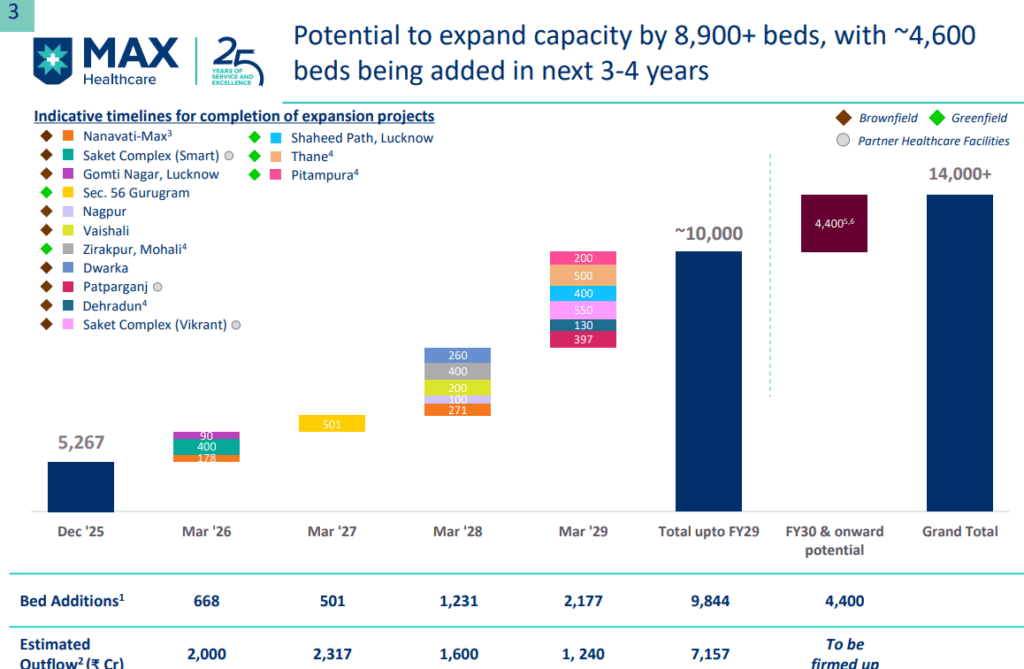
Max plans to take its model pan-India through a Rs. 5,000–6,000 crore capex plan targeting a bed count of 9,000–10,000 by FY28–29, funded almost entirely by internal accruals. Abhay Soi has specifically named eastern and southern India as target regions. Concrete steps are already underway — in April 2026, Max entered into an agreement to acquire a hospital in Odisha. Expansion will involve greenfield, brownfield, and bolt-on M&A in tertiary-care-oriented segments across Tier 2 and Tier 3 cities — not just metros.
Source: Company presentation
The diagnostics vertical is also being scaled. It currently generates Rs. 175 crore in revenue (FY25), with EBITDA margins in the low-to-mid teens — below those of pure-play diagnostics companies. Growing this segment without dragging down overall margins will require careful management. The home healthcare segment (Rs. 212 crore turnover) is another area earmarked for growth, given its low capex requirements.
Narayana Hrudayalaya – The Hospital with a ‘Heart’
Narayana Hrudayalaya (now branded Narayana Health) was founded in 2000 in Bengaluru, starting with a cardiac-care hospital. It is near-synonymous with its founder, Dr. Devi Shetty, and with the mission of delivering high-volume, low-cost, high-quality specialty care — particularly cardiac surgery and other complex procedures.
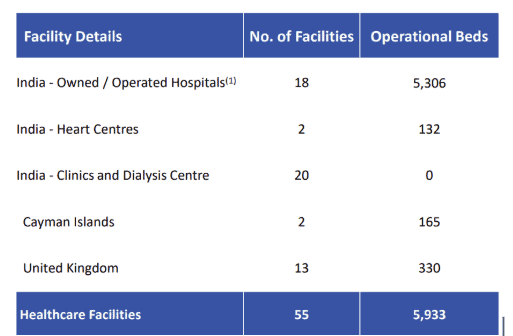
The network today covers 18 owned or operated hospitals, 2 heart centres, 20 clinics and dialysis centres, and 2 hospitals in the Cayman Islands. A recent acquisition also marks its first foray into the UK. Within India, South and East account for more than half the beds, with Bengaluru still contributing around 35% of operating revenues.
Source: Company presentation
Over the last five years Narayana has maintained a revenue CAGR of 12% though this was not linear. It coincided with facilities going live, Cayman Islands facility ramp up, price reviews. This coupled with a focus on case mix, driving volumes and efforts to improve ARPOB including a ramp up of the Cayman Island facility defined Narayana’s journey in the last five years.
Despite a somewhat altruistic orientation, Narayana holds its own on margins. Scale and operational efficiency keep costs low, placing it within range of its peers. An interesting point to note here is the Cayman Islands business that accounts for 20 to 25% of revenue but a greater than in proportion share of the margins.
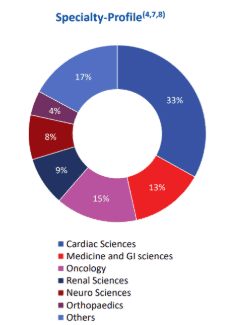
The business still has a strong cardiac orientation — true to its roots — though management has been consciously working to grow the contribution from oncology and other high-value specialties.
Narayana also runs an integrated care and insurance programme in select geographies, though this remains in an early phase and needs meaningful scale.
Back to the Cayman Islands targeting medical tourism and US-insured patients, they contribute approximately 20–25% of total revenue. Narayana’s Cayman adventure started in 2014 as a stake which translated into full ownership in 2018. Importantly, this geography benefits from favourable tax treatment, which makes reinvesting locally more attractive than repatriating earnings to India. With a significant portion of its revenue (and profits) derived from outside India, Narayana has a unique risk of being exposed to regulatory risks in these geographies and geopolitical and ‘black swan’ risks that might come in the way of medical tourism traffic to the Cayman Islands.
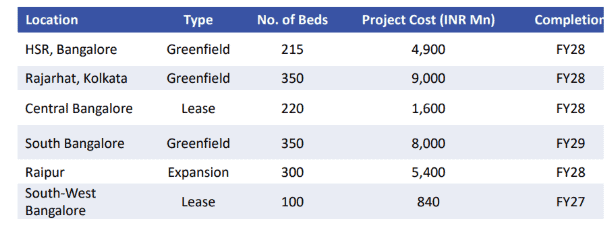
Back in India, Narayana has flagged capacity constraints at some of its key facilities (it does not publish occupancy rates). Growth could moderate until new capacity comes online. A Rs. 3,000 crore capex plan is underway (more than half is greenfield). As is typical with greenfield additions, margins are expected to soften during the ramp-up phase before recovering.
Source: Company presentation
Manipal – The Soon to be New Kid on the (listed players) block
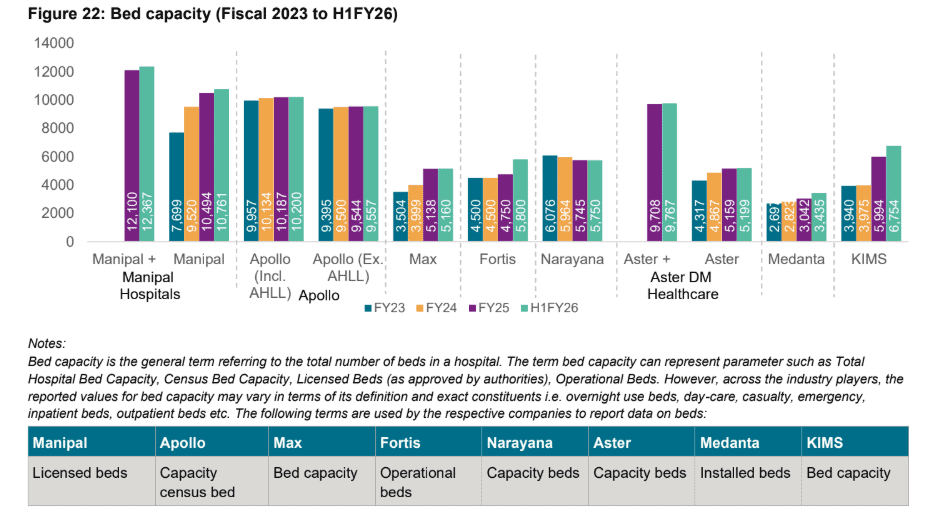
Manipal’s absence from the listed universe has been conspicuous. That will change soon — it has filed its DRHP and an IPO could happen in the near future. When it lists, it will lead the pack on bed capacity by a wide margin, particularly after its recent acquisition of Sahyadri Hospitals.
Source: DRHP
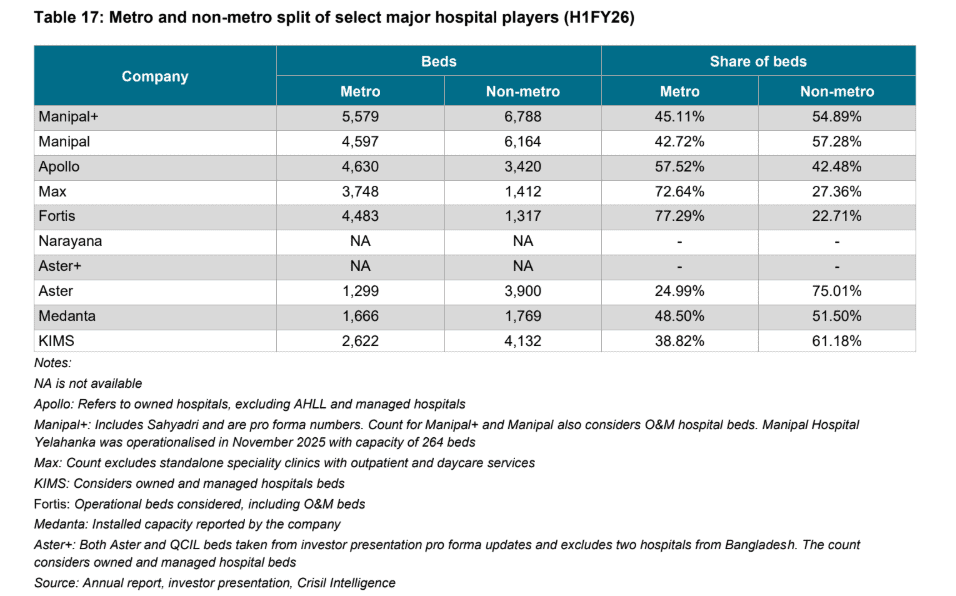
Manipal’s network of 38 hospitals spans the country more evenly than most peers. Key regions include Karnataka; Maharashtra and Goa; and West Bengal, Odisha, Jharkhand, and Sikkim in the east. Unlike Max and even Fortis — which are predominantly metro-focused — a little over half of Manipal’s beds are in non-metro markets.
Source: CRISIL report commissioned by Manipal Hospitals for the DRHP
Backed by Temasek, Manipal has been on an aggressive inorganic expansion drive from FY21 through the six months ended September 30, 2025. It leads the sector in bed additions via acquisitions during this period, with Sahyadri Hospitals being the most recent and largest.
This is the classic PE playbook: capital infusion, aggressive expansion, professional management, governance improvements, consolidation, and a sharp focus on operational performance. Despite the integration challenge posed by multiple large acquisitions, Manipal’s operating metrics have moved in the right direction.
This has naturally translated into healthy EBITDA margins despite a dip.
PE investors typically use IPOs as an exit mechanism after an intense investment phase. In Manipal’s case, the IPO proceeds will be used to repay approximately Rs. 5,300 crore in debt and provide Temasek a partial exit, leaving it with a substantial stake in a meaningfully de-levered business.
Which brings us to the broader PE footprint
Manipal is not the only hospital business carrying significant PE backing. Healthcare — and hospitals in particular — has been a major destination for PE capital since the pandemic. What began as minority investments has increasingly evolved into controlling stakes, with PE players driving expansion through capital infusion, professional management, and a relentless focus on operational improvement.
Key players in this space include Temasek, KKR, Blackstone, TPG, Advent International, CVC, the Ontario Teachers’ Pension Plan, and specialist healthcare funds like Quadria Capital. Sahyadri Hospitals, for instance, passed through multiple PE hands — from promoters to Everstone, then to the Ontario Teachers’ Pension Plan, before landing with Temasek-backed Manipal.
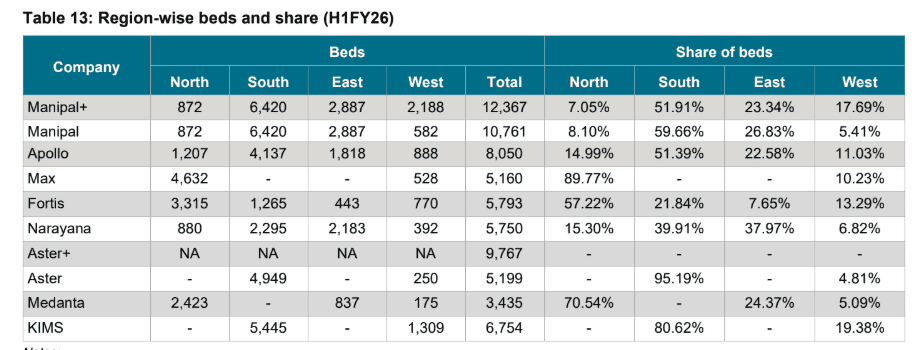
Another significant deal worth noting: the merger of Aster DM and Blackstone-backed Quality Care. Aster DM, which had a sizable Gulf presence, chose to separate the GCC business to allow the India hospitals segment to command a valuation that its promoters felt it deserved — given the very different market dynamics in the GCC. Now on a mission to become a pan-India player (having previously been predominantly South India-focused), Aster DM will absorb Quality Care’s 5,000-plus beds and has plans to add a further 3,500 by FY27.
Source: Crisil report
The combined Aster-Quality Care entity will be jointly controlled by Aster DM and Blackstone. This gives Blackstone a major, liquid position in a pan-India hospital operator — making a future exit more straightforward. Blackstone’s route to this position was multi-step: Blackstone acquired a controlling stake in Quality Care (holding company of Care Hospitals, Hyderabad), which it bought from Evercare (a PE backed healthcare delivery platform). Quality Care was then used to acquire KimsHealth (Kerala) by buying out True North, also a PE investor. The combined Care + KimsHealth platform was then folded into Aster DM.
Max Healthcare’s own transformation — under KKR and Abhay Soi — is another example of PE-driven value creation, with KKR making a full exit via block deals once the business had matured.
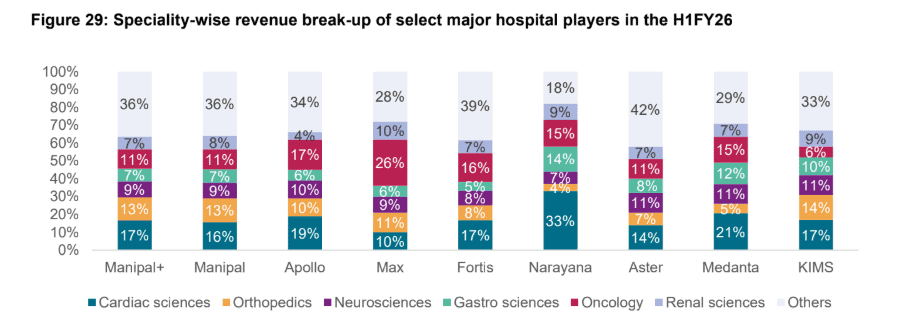
Global Health, which operates the Medanta hospital chain across North and East India, is a tertiary-care-tilted business. Smaller in bed count but commanding a higher ARPOB due to case complexity, it remains a promoter-led company under Dr. Naresh Trehan. The Carlyle Group invested and exited via the IPO.
Source: CRISIL report commissioned by Manipal Hospitals for the DRHP
Source: CRISIL report commissioned by Manipal Hospitals for the DRHP
Krishna Institute of Medical Sciences, focused on Andhra Pradesh and Telangana, has had General Atlantic as a PE backer (after buying out ICICI Ventures). General Atlantic took a partial exit via the IPO and subsequently made a full exit.
Other notable hospitals with PE backing include oncology-focused HCG (backed by CVC Capital and KKR), Motherhood (TPG), and Baby Memorial (BPEA EQT).
Apollo is something of an outlier here — PE involvement is limited to Advent’s stake in Apollo HealthCo.
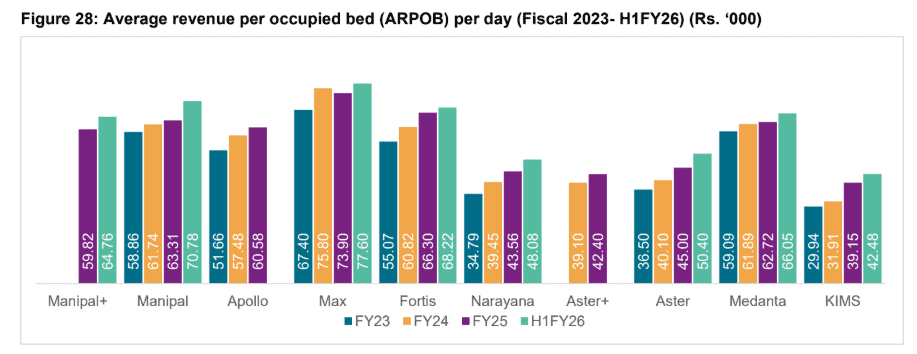
One thing is certain – the PE-driven model has propped up profitability metrics. ARPOB has risen across the board, and for most players, the 5-year EBITDA CAGR has outpaced revenue CAGR — a sign of improving efficiency.
However, the question that regulators are now beginning to ask is whether this PE-driven chase for high profitability serves patient interests.
So is the sector investable now?
The last few years have seen a combination of various factors defining the sector’s performance. Careful capacity additions and meaningful consolidation took place alongside improvements in operating metrics, thanks to PE interest.
But the next few years look different. The years from now until FY 30 will bring significantly more beds online with a meaningful chunk of it via greenfield additions. The top players collectively plan to add over 25,000 beds — marking the beginning of a capex cycle that will play out over the medium term.
Historically, hospital capex cycles have meant long gestation periods and oversupply, which compressed return ratios. But companies have found ways around this — through brownfield expansions, bolt-on acquisitions, and funding capex from internal accruals rather than debt. The structural demand-supply gap could provide a little bit of a buffer in some regions.
The case for the sector
Structural tailwinds are durable and well-established. Most large players have demonstrated a track record of improving operating metrics since recovering from the pandemic. The current capex cycle will play out over the next several years, with the impact cushioned by sector tailwinds and the structural supply shortfall. But all of this and more, seems to be priced into the rich valuation multiples of stocks in the sector, making for few buying opportunities.
Risks to consider before investing
- Valuations are already rich across the board. Much of the growth appears to be priced in, leaving little room for disappointments or disruptions in earnings. With EV / EBITDA multiples at over 30, EBITDA growth needs to be upwards of 20% to be justifiable.
- For the past year, the Indian government has been looking into inefficacy of health insurance in India and the issue of overpricing by hospitals has come up time and again. There’s debate about pricing caps on hospitals, which if it becomes a policy prescription, can lead to swift derating of multiples for the sector.
- Capex cycles carry execution risk — the route a company takes to expand matters. Brownfield and bolt-on acquisitions are preferable to greenfield which takes longer to execute and mature.
- Several players are targeting the North, which could mean potential crowding in this area. At the national level, demand exceeds supply — but regional concentration of new beds could temporarily cause a localised glut, slowing break-even timelines.
- Rich valuations offer limited near-term upside and could introduce volatility as capex progresses.
- Consider the PE overhang — is the retail investor effectively funding a PE exit? For those seeking hospital exposure with lower concentration risk, a diversified healthcare fund may be a more prudent entry point.
Conclusion
As it stands now, a combination of high profitability combined with significant capital infusion either through strategic stakes or IPO or QIP have flooded the capital availability for all players to be able to undertake significant expansion. In absolute terms, these organised hospital chains are adding around 50% more beds in the next four years than they have now and it needs demand to keep growing at double digits for companies to reap the benefits of this expansion in their profitability and return ratios.
Players also have geographies where they dominate – while Apollo is strong in the South, Max and Fortis dominate the north. One may have to play the sector through multiple players to be able to capture the pan-India opportunity. At this juncture, a safer approach for investors may be to go with healthcare funds or ETFs that have ~20% weight to hospitals comprising Apollo, Max and Fortis.






2 thoughts on “Sector Review: Multispeciality Hospitals”
Super Analysis …Thank You for all the hard work …
Thank you Sir!