
Mutual funds & ETFs

PrimeInvestor Recommendation: A passive option to beat other passive and active strategies
Should Nifty 50 be your only choice to play passive? What if a smarter fund can return better than the Nifty 50 or the Nifty

Should Nifty 50 be your only choice to play passive? What if a smarter fund can return better than the Nifty 50 or the Nifty


If the recent events in the debt space brought to light the liquidity risk arising from lower rated papers, you probably haven’t seen the unfolding of various kinds of risk since September 2018. In 2013, when duration became a risk on the back of rate hikes, money flowed copiously to credit risk over the next 5 years. Now, the cycle has turned. Money is moving to duration from credit risk.

If someone wants to allocate equal amounts to a Nifty 50 index fund and a Nifty Next 50 index fund, then is it better to allocate that amount to a single Nifty 100 index fund? This was a query we received from a subscriber, and one we thought would be interesting for you to know as well. After all, the Nifty 50 and the Nifty Next 50 anyway add up to the Nifty 100 so wouldn’t it amount to the investing in same thing?

The Securities Exchange Bord of India (SEBI) recently came up with a circular that requires AMCs to list schemes that are being wound up. This

Active funds or index funds is a call that continues to remain elusive in the Indian context. While that debate goes on, there is another emerging class of funds – not too active not fully passive. They are quant funds.

Franklin India came out with a communication dt. May 14, 2020 to its investors, on its 6 debt schemes to be wound up. The communication, after apologizing to investors, had the following key points.
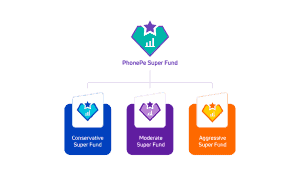

When PhonePe announced last week that they were expanding their mutual funds offering on their app by offering so-called ‘Super Funds’, I was actually quite excited. I was an early adopter of the UPI app, and till date, it is my primary app for money transfers. They probably have the cleanest UX among all UPI apps and I was keenly watching their entry into MF services.

A recent query we received from a customer concerned Aditya Birla Sun Life Frontline Equity. Our MF Review tool throws up a sell on this fund. The questions raised were: Why, since it was a fund that had been delivering returns and was considered among the best funds and was highly rated.

Over the course of the last 2 weeks, following the Franklin debt funds’ fallout, many of you (our subscribers) have written to us seeking answers to a number of questions on the debt funds you hold.
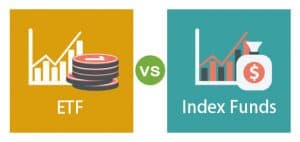
For a long-term investor, is an ETF a better or poorer option compared to index funds? Which is more expensive in the long term? Can one replace your recommendations of index funds (or FoF, like Motilal Oswal Nasdaq 100 FoF) with the corresponding ETF? It’s a little confusing because your Prime Funds and some of your portfolios recommend ICICI Prudential Nifty Next 50 Index fund, but ICICI Prudential Nifty Next 50 ETF is not recommended in Prime ETFs or portfolios. Shouldn’t the performance be same? And what is the impact of tracking error on investor returns?


After the Franklin Templeton debacle, CEOs of asset management companies have been out in big numbers across media to reassure investors that this was an isolated case and that there’s no crisis for the debt fund industry itself.

Kotak Flexicap fund suits any investor with a timeframe of 4 years and above. Here’s why the fund makes a good investment. When stock markets are volatile and there’s uncertainty all around, you need an option that can navigate across markets, that’s steady in strategy, and that is large-cap based.
Hold On
You are being redirected to another page,