Prime Stocks: An update on a recommendation
When a stock recomendation we give runs up sharply, what should be your course of action? Should you exit or should you hold or should

When a stock recomendation we give runs up sharply, what should be your course of action? Should you exit or should you hold or should

In the first of our updates in this review cycle, we explained the changes we have made to Prime Funds, our recommended fund list. In this second update, we thought to cover two different aspects: one, changes we made to our MF Review Tool, in the way we call out our recommendations. Two, trends we have observed unfolding over the past couple of quarters that we’re keeping a watch on.
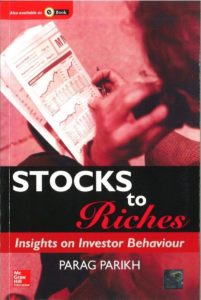

Stocks to Riches explains the fundamental concepts one needs to understand, to achieve success in the stock markets. Concepts like investing, differences between trading and speculation, loss aversion, sunk cost fallacy (and how to avoid falling into it), decision paralysis, mental accounting, and herd mentality. Every investor has dealt with and will have to deal with these situations in their investment journey. So having all these concepts neatly compiled and explained in one book certainly helps.
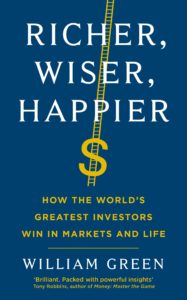

There are few things that are so beguilingly simple yet devilishly complicated as investing in the stock market. There are but a few hundred stocks


Analysis beyond the P&L and the Balance Sheet is a must if we have to take a long term view of any company. I am not referring to fundamental or technical factors, but to more number work based on the published accounts. I am referring to the cash flow. My approach is different from what most textbooks would prescribe. Statutorily the accounts do carry something called the ‘funds flow’. That is not what I mean when I talk about ‘cash flow’. In the past, during a few of my presentations, I have taken up some analytical work on companies like Sintex, ABG Heavy Industries where a reconstruction of the cash flow showed that the story was vastly different from what the EPS and the PE numbers were telling. A solid cash flow analysis can tell us what the health of the business is and based on what current and likely future trends are, what would be the outcome.

SEBI has come out with its order regarding l’affaire Franklin Templeton debt funds. The 100-page document is categorical in its indictment of the AMC and the ways in which these debt funds were managed. 2 messages are clear from the order: One, investor protection is paramount to the regulator. Two, fund managers and AMCs cannot take their fund management responsibility lightly.
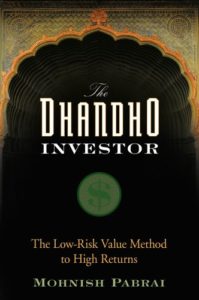
We’ve heard of fusion music, we’ve heard of fusion cuisine, so why not a fusion book?
Colour me naive, but when I picked up ‘The Dhandho Investor’ – a book with an Indian author and an Indian name, I thought it would be about Indian markets and for Indian investors. It was not. Although the author is Indian, and there are many ‘Indian’ anecdotes in the book, it is aimed at an American audience.
But that should not stop you from grabbing it and reading it. It’s a delightful book – expertly written with ideas that you can use in any free market economy.
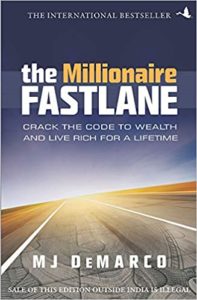
repreneur forum that I follow, someone asked a question to the group – “Which books made you the most money?”. The answers that followed ranged across topics of investing to motivational to actual business books. But one book that got the most mention was this book by M J DeMarco titled, “The Millionaire Fastlane”.
However, people who commented on this recommendation seemed quite polarized. Some of them REALLY liked the book, and other others REALLY hated it.
So, I had to buy and read it. 🙂
I just finished it, and I have to say, I hated it.
But, if you read it, you may like it. And that’s ok. While not quite liking it, I could quite see why some people will really find it inspiring or at least, alluring.
In this review, let me give you a summary of what the author says, and tell you what I thought about the ‘fastlane’ he recommends.

Occasionally, we get questions at PrimeInvestor about investing in cryptocurrencies. Unsurprisingly, these questions arrive at a higher frequency when these currencies are trading higher and


If there’s one thing that governments love to do with their annual Budgets, it is to confuse ordinary folk with rule changes that have plenty of the fine print. This time, the change that has set off a confusing debate has been the budget proposal to limit the tax breaks on the Employees Provident Fund (EPF), the favourite retirement savings vehicle for many salary-earners. So, what changed for EPF subscribers in the 2021 Budget? Has the government now relaxed those provisions in the Finance Bill? What is the government trying to do to the EPF overall and should you be looking at alternatives to it? We answer these questions and many more here.

A good way to gauge the state of personal finance books that are India-centric would be to visit the ‘Book’ section of Amazon’s India website.
If you go to the American Amazon.com, you will find the ‘Business and Money’ section, under which you will find ‘Personal Finance’. Boom, done – you have access to a treasure trove on all topics PF.
If you go to the Indian Amazon.in, you will find a ‘Business and Economics’ section, and under that, you will find ‘Analysis and Strategy’, ‘Economics’, and ‘Industries’. If you, by power of logical reasoning and elimination, go into the first category, you will find, along-side books about American personal finance and self-help (Dale Carnegie!), a smattering of books by Indian authors to help Indian investors.
A handful, at best.
No doubt, this is an emerging section, but the current state of limited selection is properly captured by just browsing through these aisles.
Monika Halan’s ‘Let’s talk money’ is, especially in this context, a much-needed publication that addresses a sore need in the Indian market.
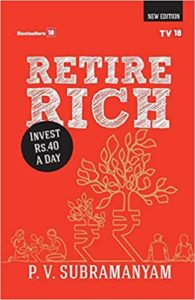
World over, planning and investing for retirement in a disciplined fashion is not the norm. However, western countries have a healthy social security net that would keep people out of really bad situations, and many such countries would have state-sponsored health coverage that would take care of the inevitable big bills in old age.
India has neither, at least not in a manner that will cater to a middle-class life-style and care aspirations here. Hence, planning, saving, and investing for retirement becomes a must-do activity during the earning years of an individual in India.
P V Subramanyam’s book – “Retire Rich – Invest Rs 40 a day” was the first book on this topic. The original version was published in 2011 and sold more than 150,000 copies, and is now available in a new edition (since 2019).
Hold On
You are being redirected to another page,